
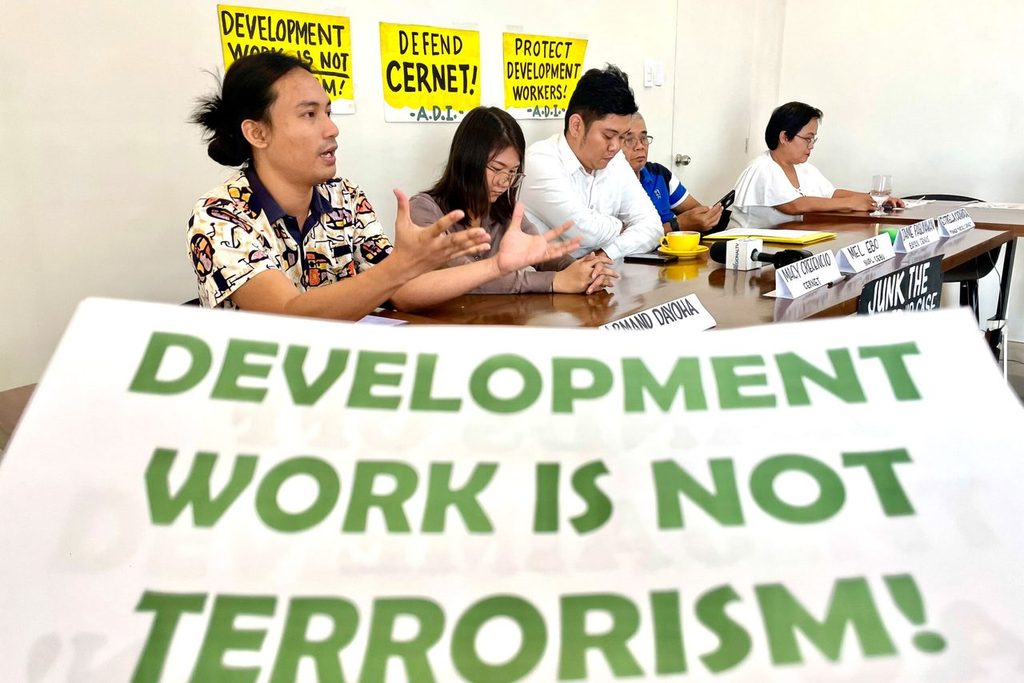
The recent CERNET court victory is a landmark win against a repressive government campaign using anti-terrorism laws against development NGOs.
Year after year, the Philippines suffers super-typhoons and devastating floods, which are getting worse with climate change. At the same time, funds meant for vital flood defences are ending up in the pockets of politicians and businessmen. This corruption goes along with decades of environmental destruction from logging, mining and land clearances for plantations, often enforced at gunpoint.
Amid such government corruption and repression, non-government organisations (NGOs) are often the only bodies supporting local people. The Philippine government, however, regards such community organising as a threat. The police and military routinely accuse NGO staff and volunteers of being communists and terrorists. They are kept under surveillance; their homes and offices are raided. In some cases, they are assassinated or disappeared.
In the last few years, the government has developed new ways of attacking development NGOs. In 2020, President Duterte passed his Anti-Terrorism Law, which works hand in hand with the Terrorism Financing Prevention and Suppression Law of 2012. These enabled government agencies to arbitrarily designate both individuals and organisations as terrorists or financial supporters of terrorists and to freeze their bank accounts. President Marcos continues this strategy.
Targeting their finances has proved a highly effective way of paralysing NGO operations. Over the last two or three years, these anti-terrorism laws have been used against some of the most respected development organisations in the country, including the Community Empowerment Resource Network (CERNET), Leyte Center for Development (LCDe), Citizens’ Disaster Response Center Foundation (CDRC) and Paghida-et sa Kauswagan Development Group (PDG), and the Cordillera People’s Alliance (CPA).
CERNET is a network of humanitarian and development organisations in the Visayas region. In May 2023, charges were filed accusing its staff and volunteers of “ financing
terrorism”. One of those indicted was Father Herbert Fadriquela, the chair of CHRP-UK. CERNET’s bank account was frozen and most of its programmes ground to a halt. For the next three years, the accused endured further harassment from the military. The
Cebu City Police posted a photo of one of the accused, Estrella Catarata, on social
media, falsely naming her as the “No. 1 most wanted person in Central Visayas”. Court hearings were constantly delayed and postponed, or reduced to a farce when prosecution witnesses offered no relevant testimony.
In May 2026, the case was finally dismissed with the judge finding numerous violations of legal procedures in the filing of the charges. This victory only came after those facing indictments had suffered three years of stress and anxiety. Members of CERNET used that time, however, to mount a highly effective campaign highlighting the abuse of Anti-Terror laws to attack development organisations. As well as raising their case in the national media, they brought it to foreign embassies – some of CERNET’s funds came from German aid agencies. CHRP-UK held meetings with UK embassy officials who sent official observers to the court hearings. Estrella Catarata believes that this international scrutiny helped ensure their team’s case was properly heard. They also
showed the government that such misuse of the law damages their international
reputation. They are now going even further, filing criminal, civil, and administrative complaints against those who brought the case against them.
The CERNET victory and a similar court win by LCDe in Leyte, may mark a significant moment in turning the tide against the government’s sweeping and abusive use of anti- terror laws. However, these wins do not prevent the future use of these laws against NGOs. There are also further repressive measures in the pipeline, such as the proposed “terror grooming” bill filed by Senator Ronald de la Rosa. Though the Senator, a former police chief, is not currently in a position to progress his bill as he is in hiding from an arrest warrant issued by the International Criminal Court.